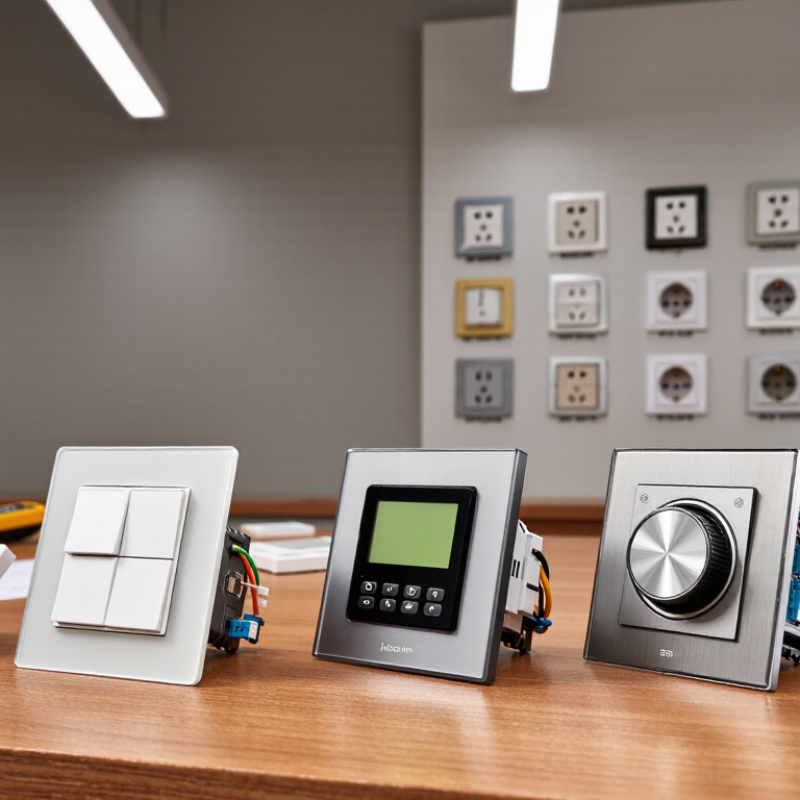
China has become a major sourcing hub for Smart Switch products, serving residential, hospitality, and commercial projects worldwide. Buyers can find wall switches, dimmers, curtain controllers, and scene panels in many price ranges. Yet a polished product page does not guarantee reliable performance.
As smart-home analyst Stacey Higginbotham has observed, “The smart home should reduce friction, not create more technology problems.” This principle matters when evaluating Chinese manufacturers. A capable supplier should explain relay ratings, neutral-wire requirements, standby power, wireless protocols, and firmware update procedures. It should also provide clear test reports, installation drawings, sample units, and traceable quality records.
Look closely at the details. A switch may fit a European wall box but fail in a shallow North American box. Its app may support Wi-Fi, while its local control disappears during an internet outage. A dimmer may work well with LED bulbs, yet flicker under low loads. These weaknesses are easy to miss during a short demonstration.
This guide examines China’s leading Smart Switch manufacturers through product capability, factory experience, certification readiness, customization support, and after-sales reliability. It considers Matter, Zigbee, Bluetooth, and Wi-Fi options without assuming one protocol suits every project. Supplier selection remains imperfect. Catalogs change, certifications require verification, and performance can vary between production batches. Careful buyers should test samples under real electrical conditions before placing large orders. A lower price is useful, but dependable documentation, responsive engineering, and consistent quality usually create greater long-term value.
A reliable smart switch manufacturer is more than a low-cost factory. It should understand electrical safety, wireless communication, and long-term product stability. Factory experience matters when designing switches for different wall boxes, voltage ranges, and installation habits. Ask for clear test records, material specifications, and traceable quality procedures.
A professional manufacturer tests each batch, not only the first sample. Important checks include insulation, temperature rise, relay endurance, touch response, and network recovery after power loss. Firmware support also matters. Buyers should confirm update methods, data protection practices, and compatibility with common control systems. However, no supplier is flawless. A polished sample may still hide production weaknesses, so independent inspections can provide useful evidence.
Tips: Request a pre-production sample. Compare it with mass-production units. Review factory audit documents, export experience, warranty terms, and spare-part access. Visit the production line when possible, and observe testing rather than relying on photographs. Ask difficult questions. Silence is a warning sign. A dependable partner also reports defects honestly and explains corrective actions. That attitude often reveals more than a sales presentation.
China’s smart switch manufacturers serve global buyers with several practical product categories. Common options include single and multi-gang wall switches, dimmers, scene panels, curtain switches, and smart plugs. Each category fits a different installation scenario. A dimmer needs compatible lighting loads, while a standard relay switch may require a neutral wire. This detail is easy to miss.
Current technologies include Wi-Fi, Zigbee, Bluetooth Mesh, Thread, and Matter compatibility. Wi-Fi suits simple retrofit projects with existing routers. Zigbee and Thread can reduce network congestion in larger homes. Matter may improve cross-platform integration, but real performance still depends on hubs, firmware, and network design. Some models add occupancy sensors, energy monitoring, schedules, and overload protection. In practical testing, response time can change when several devices share a crowded wireless network. A polished specification sheet does not always reveal that weakness.
Tips: Ask for wiring diagrams, load-range data, sample units, and firmware update policies. Confirm voltage, frequency, gang-box size, certifications, and local installation requirements before ordering. Test no-neutral models with low-wattage LED lamps. Flickering may appear. Request factory inspection records and communication-range tests for your target building. Also review the mobile application’s language support and cloud dependence. These checks feel slow, but they prevent expensive replacements and uncomfortable installation surprises.
| Product Category | Typical Application | Common Electrical Specifications | Connectivity Options | Key Smart Technologies | Installation and Wiring | Safety and Compliance Considerations | Best Fit for Global Buyers |
|---|---|---|---|---|---|---|---|
| In-Wall Relay Switch | Remote control of lights, fans, sockets, and other fixed loads in residential and commercial buildings. | Usually designed for 100–240 V AC systems; current capacity commonly ranges from approximately 5 A to 16 A depending on the load type and model. | Wi-Fi Zigbee Thread Matter | Remote on/off control, schedules, timers, energy monitoring on selected models, voice-assistant integration, and local control. | Neutral-wire and no-neutral versions are available. No-neutral models may require a bypass or minimum-load solution. | Verify insulation, over-temperature protection, relay rating, enclosure design, and regional electrical certification before deployment. | Residential renovation, apartments, hotels, offices, and smart-home retrofit projects. |
| Smart Dimmer Switch | Dimming of compatible LED lamps, incandescent lamps, and selected low-voltage lighting systems. | Typically supports 100–240 V AC input; LED load ratings are normally lower than incandescent load ratings and vary by dimming method. | Wi-Fi Zigbee Thread Matter | Leading-edge or trailing-edge dimming, minimum-brightness adjustment, scene control, gradual fade, and overload protection. | Available in single-pole, multi-way, and neutral-free configurations. Lamp compatibility testing is recommended. | Check flicker performance, electromagnetic compatibility, thermal derating, and compatibility with local dimming standards. | Premium homes, hospitality projects, offices, and lighting-control upgrades. |
| Multi-Gang Touch Switch | Centralized control of two, three, or more lighting circuits from one wall plate. | Commonly rated for 100–240 V AC; individual channels often support a few amperes to approximately 10 A, depending on design. | Wi-Fi Zigbee RF Matter-ready | Capacitive touch sensing, status indicators, scene presets, app control, schedules, and multi-device automation. | Usually wall-box mounted; neutral-wire requirements depend on the circuit and product architecture. | Look for touch-panel durability, moisture resistance where relevant, fire-retardant materials, and protection against accidental switching. | Modern residential interiors, serviced apartments, villas, and hospitality developments. |
| Smart Plug and Socket | Plug-in control and monitoring of portable appliances, lamps, chargers, and small equipment. | Regional versions commonly support 100–240 V AC; typical models are rated around 10–16 A, with lower limits for motor or heating loads. | Wi-Fi Zigbee Bluetooth Matter | Energy measurement, overload cutoff, countdown timer, away mode, power-state recovery, and automation based on consumption. | Plug-and-play installation; socket geometry, grounding, shutters, and plug format must match the destination market. | Confirm national plug standards, child protection, grounding, thermal protection, and certified maximum load. | Consumer retail, rental properties, energy-management programs, and light commercial applications. |
| DIN-Rail Smart Relay | Control of lighting, pumps, gates, HVAC equipment, and other circuits in distribution cabinets. | Designed for panel installation; channel ratings commonly range from approximately 10 A to 63 A, depending on the relay or contactor arrangement. | Wi-Fi Zigbee RS-485 Ethernet | Multi-channel switching, energy metering, interlock logic, schedules, Modbus integration on selected models, and remote diagnostics. | Mounted on standard DIN rails in electrical cabinets; professional installation is normally required. | Check creepage and clearance, circuit-breaker coordination, cabinet heat dissipation, surge protection, and applicable low-voltage rules. | Commercial buildings, factories, multi-unit housing, solar systems, and building-management projects. |
| Smart Curtain and Blind Controller | Motorized curtains, roller blinds, shutters, awnings, and window-covering systems. | Supports the voltage and motor type specified by the blind system; many wall controllers use 100–240 V AC input with interlocked directional outputs. | Wi-Fi Zigbee Thread Matter | Open/close/stop control, position percentage, sunrise and sunset schedules, group control, calibration, and obstacle-related automation where supported. | Requires correct motor wiring and directional interlock. Compatibility with tubular, dry-contact, or bus-controlled motors must be confirmed. | Verify motor current, stall protection, emergency stop behavior, and safe operation around children and pets. | Hotels, offices, smart homes, villas, and energy-saving daylight-management projects. |
| Scene and Wireless Control Panel | Activation of lighting scenes, HVAC presets, curtains, and multi-device automation without switching high-voltage loads directly. | Often battery-powered or supplied by low-voltage DC; it generally controls devices through a wireless hub or local mesh network. | Zigbee Thread Bluetooth Sub-GHz RF | Single-press, double-press, and long-press actions; scene recall; device grouping; and configurable automation triggers. | Surface-mounted, wall-mounted, or portable. Battery models reduce rewiring requirements. | Assess battery life, wireless encryption, button durability, and network fallback behavior. | Retrofit projects, hotels, conference rooms, senior-living facilities, and premium residential spaces. |
| Industrial Smart Control Switch | Remote monitoring and switching of pumps, motors, machinery auxiliaries, lighting circuits, and industrial equipment. | May use relay outputs, contactors, or solid-state outputs; voltage and current ratings depend heavily on the selected industrial interface. | Ethernet RS-485 Modbus RTU/TCP 4G/5G | PLC or BMS integration, remote status feedback, event logging, scheduled control, alarm reporting, and edge automation. | Panel or enclosure installation by qualified technicians; control circuits are often separated from power circuits. | Review industrial EMC performance, ingress protection, isolation, surge immunity, and cybersecurity requirements. | Factories, infrastructure, agriculture, water treatment, energy systems, and remote assets. |
| Energy-Monitoring Smart Switch | Control and measurement of household circuits, appliances, electric heating, and distributed energy loads. | Available as plug-in, in-wall, or DIN-rail devices; current measurement may use internal sensing or external current transformers. | Wi-Fi Zigbee Ethernet 4G | Real-time power, voltage, current, and accumulated energy data; threshold alerts; load scheduling; and photovoltaic self-consumption optimization. | Installation ranges from plug-in monitoring to fixed-panel wiring. CT direction and phase configuration must be correct. | Confirm measurement accuracy, isolation, maximum conductor size, overcurrent protection, and data-security practices. | Energy retrofits, solar-plus-storage systems, commercial metering, and demand-management programs. |

Evaluating Chinese smart switch manufacturers requires more than comparing unit prices. Check the factory’s production records, engineering team, and quality-control process. Ask for recent test reports, material specifications, and sample inspection data. Certifications should match your target market, not simply appear in a sales presentation. Verify the issuing body and certificate scope carefully.
A working sample reveals details that brochures hide. Test touch response, relay noise, Wi-Fi stability, heat buildup, and performance after repeated switching. Review firmware update procedures and data-security practices. Request a clear warranty, spare-parts policy, and response time for technical support. Reliable manufacturers explain limitations instead of promising everything.
Tips: Visit the factory or arrange a live video audit. Compare samples from different production batches. Confirm packaging, labeling, lead times, and minimum order quantities in writing. Ask for customer references in similar markets. Small pilot orders can expose weak processes early.
Do not judge quality from one perfect sample. Production may vary. I have seen polished prototypes followed by slower support and inconsistent assembly. A second audit may feel inconvenient, but it can reveal training gaps, manual testing, or unclear responsibility. Keep communication documented, including electrical ratings and compatibility requirements. The best supplier is not always the cheapest. Reliability shows over time.
For global buyers, smart switch quality begins with a documented manufacturing system, not a polished product page.
ISO 9001-based procedures should control suppliers, drawings, firmware versions, and corrective actions. IEC 60669-2-1 is a key reference for electronic switches used in household installations.
Testing should also address insulation, temperature rise, switching endurance, and electromagnetic compatibility. Small details matter. A loose terminal can become a field failure.
Independent certification adds useful confidence, but it is not complete proof. Buyers should verify certificate scope, model numbers, factory locations, and renewal dates.
RoHS and regional conformity requirements should match the target market. MarketsandMarkets reported that the smart home market could grow from about USD 154.4 billion in 2024 to USD 250.6 billion by 2029.
That growth increases pressure on factories. It may also expose weak inspection systems. A supplier should provide batch records, incoming-material checks, automated functional testing, and traceable serial numbers.
Sample testing alone is not enough.
Tips:
Request recent third-party test reports and a factory quality manual. Ask how relays are tested after repeated switching cycles.
Check whether firmware changes trigger a new safety review. Review failure data, not only pass rates.
A transparent manufacturer should explain one past defect and its corrective action.
No process is perfect. The response to failure reveals more than a certificate.
Global buyers need more than a low unit price when choosing smart switch manufacturers. Export capability often decides whether a promising order succeeds. Grand View Research valued the global smart home market at USD 80.21 billion in 2022. It also projects a 27.0% compound annual growth rate from 2023 to 2030. This growth increases supplier choices, but also increases comparison risks.
Check voltage, frequency, wiring, and installation requirements for each destination. Ask for current safety test reports, technical files, and traceable quality records. Requirements may differ across markets, even for similar products. Confirm support for required communication protocols and local app languages. A stable firmware update process matters after shipment. So does clear warranty handling. Request a sample batch before placing a large order. Inspect terminal strength, touch response, heat control, and packaging damage. A polished sample can still hide weak production consistency.