- Home
- About Us
- Products
- Total Solution
- News
- Blog
- Contact Us
Leave Your Message
-
-
Phone
-
E-mail
-
Whatsapp
-
Whatsapp

Choosing a reliable Wifi Smart Switch manufacturer in China requires more than comparing factory prices. Product quality, electrical safety, software stability, and after-sales support all influence long-term performance. This guide introduces ten notable manufacturers and examines how they serve residential, commercial, and smart-home projects.
The evaluation considers manufacturing experience, product certifications, quality-control procedures, and evidence of export capability. It also reviews practical details, including neutral-wire requirements, 2.4 GHz connectivity, relay load ratings, app compatibility, voice-assistant integration, and firmware updates. These factors matter when a switch must operate behind a wall plate for years, often in warm rooms or busy offices.
Factory capability can be revealing. A serious supplier should explain its testing process, show clear technical documentation, and provide samples before large orders. Independent audits, traceable components, warranty terms, and responsive engineering support offer stronger evidence than polished catalog images. Still, no ranking is permanently perfect. A manufacturer may perform well on hardware while offering weaker software support. Another may provide attractive customization but slower delivery.
This article therefore treats the “top ten” as a practical starting point, not an absolute verdict. Readers should verify current certifications, sample performance, integration requirements, and regional compliance before choosing a partner. Small details matter. A stable connection matters. So does honest communication when a product needs improvement.
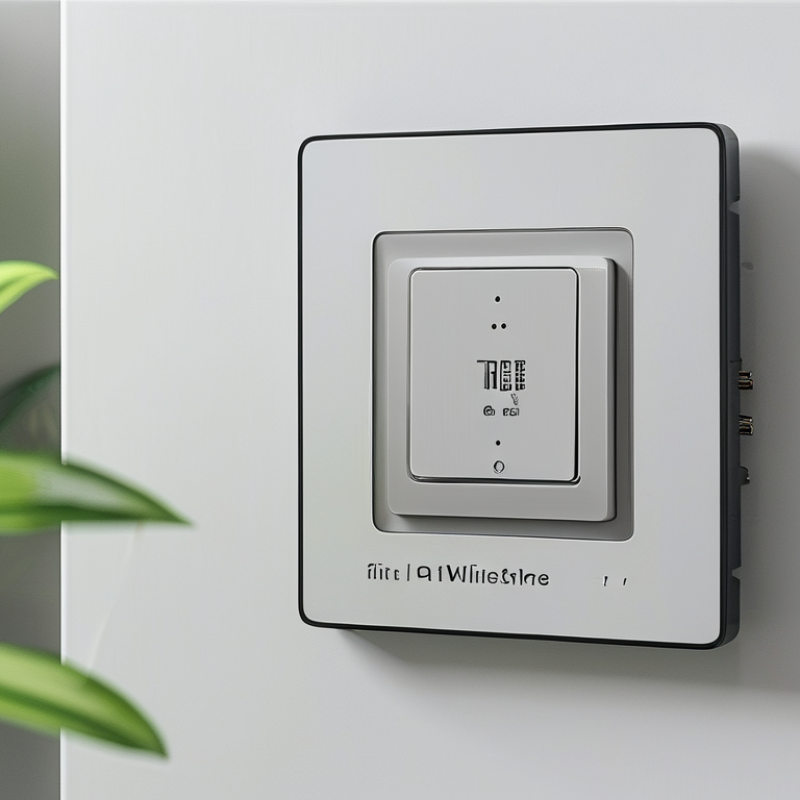
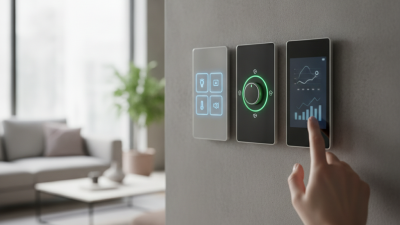
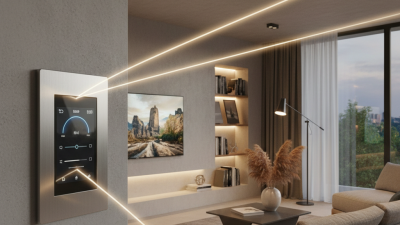
WiFi smart switches are wall-mounted controls that connect ordinary lighting to a home network. They usually operate on the 2.4 GHz band because it travels better through walls. Inside the switch, a microcontroller receives commands and controls a relay. The relay opens or closes the electrical circuit. Tap the app, and the light responds within a moment. Some models also support schedules, voice commands, and physical button control.
Installation depends on the wiring. Many switches require a neutral wire in the wall box. Older homes may not have one. A qualified electrician should verify the circuit, load rating, and grounding before installation. I have found that cramped wall boxes create more trouble than the software. The switch must also match the lamp type, especially with low-wattage LED bulbs. Otherwise, faint flickering may appear when the light is off.
The switch normally sends data through the router to a cloud service or a local control system. Local control can reduce delays when the internet fails. Strong passwords, updated firmware, and a separate smart-home network improve security. WiFi congestion can still cause missed commands. A small delay remains. Testing the switch at the wall, through the app, and during a router outage reveals its real performance. Some specifications look impressive, but daily reliability deserves closer attention.
Technical comparison table for evaluating WiFi smart switch manufacturing capabilities. The table uses generic product categories rather than company or brand names.
| No. | Generic Product Category | Typical Electrical Configuration | Wireless and Control Characteristics | Typical Rated Load | Installation Requirement | Common Protection Features | Best-Fit Application |
|---|---|---|---|---|---|---|---|
| 1 | Single-Gang Relay Switch | One independently controlled circuit; commonly designed for 100–240 V AC systems. | Usually operates on 2.4 GHz WiFi because of its longer range and better wall penetration than 5 GHz. | Typically up to 10 A Actual rating depends on the relay, enclosure, wiring, and load type. |
Neutral wire is commonly required for stable power, although no-neutral versions also exist. | Over-temperature protection, relay isolation, flame-retardant housing, and overload protection may be included. | Lights, exhaust fans, wall lamps, and other single-circuit loads. |
| 2 | Multi-Gang Relay Switch | Two to four separately controlled channels in one wall plate. | Supports app control, schedules, scenes, voice-assistant integration, and manual touch or push-button control. | Often 5–10 A per channel Total enclosure and circuit limits must also be observed. |
Neutral-wire installation is generally preferred for multiple channels and improved standby stability. | Channel separation, surge protection, thermal monitoring, and firmware fault recovery are common design targets. | Residential rooms, offices, hotels, and multi-zone lighting systems. |
| 3 | No-Neutral Smart Switch | Designed to operate without a dedicated neutral conductor at the wall box. | Uses a small standby current through the connected load to power the electronics. | Commonly 3–8 A Low-wattage LED loads may require a bypass or load-correction component. |
Suitable for older buildings where the neutral wire is not present at the switch location. | Minimum-load management, flicker reduction, over-current protection, and thermal protection are important. | Retrofit projects and residential wiring systems with limited conductors. |
| 4 | WiFi Smart Dimmer | Electronic dimming circuit rather than a simple on/off relay. | May use trailing-edge or leading-edge control; compatibility depends on the lamp and driver. | Often 150–400 W LED Incandescent and resistive-load ratings can be higher. |
Neutral-wire models generally provide better performance with low-power LED lamps. | Soft start, current limiting, thermal shutdown, minimum-brightness calibration, and short-circuit protection. | Dimmable lamps, bedrooms, restaurants, hospitality spaces, and mood lighting. |
| 5 | Smart Curtain or Blind Switch | Motor-control interface for open, stop, close, and sometimes percentage positioning. | Often includes WiFi control plus local interlock logic to prevent simultaneous forward and reverse activation. | Typically 3–5 A motor output Motor inrush current must be considered during design. |
Requires compatible live, neutral, and motor-direction wiring; installation should follow local electrical rules. | Electrical interlock, limit-switch compatibility, motor over-current protection, and stall detection may be provided. | Roller blinds, curtains, awnings, shutters, and selected tubular motors. |
| 6 | Energy-Monitoring Smart Switch | Relay or switch module with voltage, current, power, and energy measurement circuitry. | Reports real-time power and accumulated energy through a mobile application or local interface. | Commonly 10–16 A Measurement accuracy varies by current-sensing method and operating range. |
Usually requires a neutral wire and correct line-load orientation for accurate measurement. | Overload cutoff, over-voltage alert, abnormal-current detection, and configurable power thresholds. | Water heaters, appliances, office equipment, and household energy-management projects. |
| 7 | DIN-Rail WiFi Switch Module | Modular enclosure designed for electrical distribution boards and control cabinets. | Supports remote switching, schedules, timers, and integration with automation software through a network connection. | Commonly 16–63 A Higher-current systems may require contactors rather than direct switching. |
Installed on a standard DIN rail by a qualified electrician; panel space and heat dissipation are required. | Overload, over-temperature, surge, and abnormal-voltage protection depend on the specific design. | Commercial buildings, rental properties, solar-related circuits, and centralized control panels. |
| 8 | Outdoor-Rated WiFi Switch | Weather-resistant enclosure for outdoor lighting, pumps, gates, or garden equipment. | Typically uses 2.4 GHz WiFi; network range should be checked through walls and exterior structures. | Often 10–16 A Inductive loads require suitable relay and inrush-current ratings. |
Requires appropriate ingress protection, grounding, cable glands, and installation away from standing water. | Water and dust resistance, UV-resistant enclosure, leakage protection, and temperature protection are key considerations. | Garden lighting, exterior signs, pumps, garages, gates, and outdoor service areas. |
| 9 | Scene and Automation Switch | May control scenes or send automation commands without directly switching a high-power load. | Supports one-touch, multi-touch, long-press, schedules, occupancy logic, and device-to-device automation. | Load rating varies Some models are low-voltage input devices rather than power switches. |
Can be wired, battery-powered, or designed for retrofit installation depending on the architecture. | Debounce control, communication recovery, low-battery alerts, and secure pairing may be included. | Smart-home scenes, hospitality rooms, offices, meeting rooms, and accessibility controls. |
| 10 | Industrial WiFi Control Switch | Heavy-duty relay or contactor-control interface for equipment and automation systems. | May provide local control, remote monitoring, scheduled operation, and integration through standard network APIs. | Direct output commonly 16–30 A Large motors and heaters normally require an external contactor. |
Requires an appropriately rated enclosure, wiring system, grounding, and professional commissioning. | Electrical isolation, watchdog recovery, surge suppression, thermal monitoring, and fail-safe default states. | Small commercial machinery, pumps, ventilation systems, workshops, and facility automation. |
How WiFi smart switches work: The switch receives commands through a wireless network, processes them with an embedded controller, and activates a relay, semiconductor device, dimming circuit, or motor-control circuit. The device may also support local buttons, schedules, sensor triggers, and cloud or local automation. Electrical ratings, certifications, installation requirements, and supported loads vary by model and target market; the manufacturer’s technical documentation and local electrical regulations should always be checked before installation.