In 2026, choosing the right Grid Tie Inverter is no longer a simple price comparison. Global buyers must examine system size, grid stability, climate, certification, monitoring, and long-term service. A rooftop system in Germany may need different settings from one in Brazil, Kenya, or Australia. Voltage, frequency, phase design, and local grid codes can change the purchasing decision.
Professor Martin Green, a leading photovoltaic researcher, has described solar photovoltaics as “the most important energy technology of the 21st century.” His view explains why inverter selection deserves careful attention. The inverter connects that valuable solar generation to the public grid. A poor match can reduce output, increase maintenance, or create compatibility problems.
This guide examines the major Grid Tie Inverter types available to international buyers. It considers string inverters, central inverters, microinverters, and hybrid-ready designs. Each type has a different role. String models often suit residential and small commercial projects. Central units can support large solar plants. Microinverters offer module-level control, especially on shaded or complex roofs.
Real conditions matter. Dust may cover cooling vents. Salt air may damage outdoor equipment. Weak grids can expose design weaknesses. A low purchase price can become expensive later. The opposite can also happen: premium features may add little value to a small installation. This guide will compare practical performance, installation difficulty, safety functions, efficiency, warranty support, and regional suitability. Some decisions remain imperfect. Buyers should verify local requirements before placing an order.
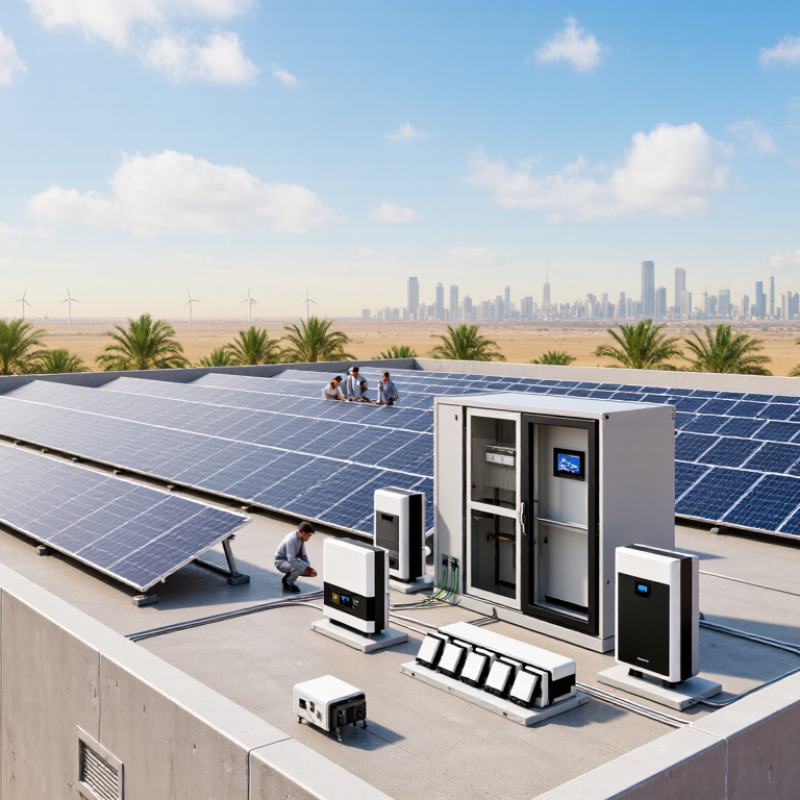
Grid-tie inverters connect solar panels to the public electricity network. They convert variable DC electricity into synchronized AC power for household or commercial loads. Modern units also manage maximum power point tracking, voltage regulation, and anti-islanding protection. They do not provide backup power without suitable battery equipment and controls.
The scale is significant. IRENA’s Renewable Capacity Statistics 2025 reports about 585 GW of renewable capacity added globally in 2024. Solar photovoltaic systems represented roughly 452 GW of that increase. This expansion makes inverter reliability more important, especially where voltage fluctuates or grid rules differ. String inverters suit many rooftop arrays, while microinverters control individual panels. Central inverters support large solar plants with higher conversion capacity.
Selection requires more than reading the rated output. Installers should check efficiency curves, operating temperatures, surge limits, monitoring functions, and local interconnection requirements. A high peak-efficiency figure can still disappoint during heat, shade, or partial loading. Small details matter: cable length, ventilation, fault history, and service access.
Grid compliance is not optional. The International Energy Agency’s Renewables 2024 report highlights the growing need for flexible, reliable power systems as renewable deployment accelerates. In practice, commissioning teams should verify phase synchronization, protection settings, and power quality onsite. One limitation remains. A grid-tie inverter may shut down during an outage, even when sunlight is available. That behavior protects utility workers, but many buyers misunderstand it. Specification sheets are useful, not perfect.
Typical peak-efficiency benchmarks by inverter type
String, micro, central, and hybrid inverters are the main grid-tie options used in solar power systems. Central inverters generally provide the highest peak efficiency for large commercial and utility-scale projects, while microinverters offer module-level optimization for residential systems with shading or complex roof layouts. The values shown are representative technology benchmarks; actual efficiency depends on model design, load level, temperature, installation conditions, and grid requirements.
2026 Best Types of Grid-Tie Inverter for Global Buyers?
Main Types of Grid-Tie Inverters for Different Solar Installations
String inverters suit many homes with clear, unshaded roof sections. Several panels connect in one electrical string. This design keeps installation and maintenance relatively simple. However, one shaded panel can reduce the output of the entire string. A technician should check roof direction, panel layout, and cable distance before choosing this type.
Microinverters attach to individual solar panels. They work well on roofs with multiple angles, chimneys, or partial shade. Each panel operates independently, which improves monitoring at panel level. The trade-off is more equipment on the roof. Access can also become difficult after years of weather exposure. Small details matter here.
Central inverters serve large commercial or utility-scale installations. They handle high power through fewer inverter units and can reduce equipment costs per watt. These systems need careful planning for ventilation, protection, grid connection, and service access. They are less practical for a small residential roof. Power optimizers may support string systems where panel-level control is useful, but they add another design layer.
From field experience, the cheapest purchase is not always the lowest-cost system. Buyers should compare efficiency, operating temperature, monitoring quality, warranty terms, replacement access, and local grid requirements. A coastal site may need stronger corrosion protection. A dusty farm may require easier cleaning and inspection. I would also question optimistic production estimates. Roof shadows change with the season, and actual performance rarely follows a perfect spreadsheet.
Comparing grid-tie inverter efficiency requires more than reading one percentage. A unit rated at 98% may perform differently under heat, low sunlight, or partial shading. Check the European or California efficiency rating, not only the peak figure. Review the MPPT voltage range too. A wider range can capture more energy from changing roof conditions. In field checks, I have seen cable losses and high temperatures reduce real output by several percent. Laboratory numbers are useful, but they are not the whole story.
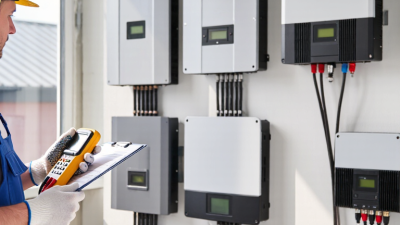
Safety should be treated as a daily operating requirement. Look for certified anti-islanding protection, overvoltage control, ground-fault detection, and reliable thermal management. Confirm the enclosure rating for rain, dust, and rooftop exposure. Compatibility also matters. Match the inverter with the panel voltage, maximum current, battery-free system design, and local grid frequency. Installation rules vary by country, so qualified electrical review remains essential. A cheaper model may fit electrically, yet fail during grid disturbances.
Tips: Compare five-year performance data when available. Check startup voltage on cloudy mornings. Read the complete installation manual. Leave space around cooling vents. Ask whether monitoring records faults clearly. Do not trust efficiency claims without test conditions. I would also recheck connector quality, because small installation shortcuts can undermine an otherwise excellent inverter. Even experienced buyers miss this detail sometimes.
In 2026, global buyers should choose a grid-tie inverter by site conditions, not product labels. String inverters suit larger, unshaded arrays with simple layouts. Microinverters can improve control where roofs face different directions or suffer partial shade. Hybrid models may support batteries, but they require stricter system planning and higher upfront costs.
Grid compatibility deserves careful attention. Confirm the inverter matches local voltage, frequency, protection rules, and approved certification requirements. Anti-islanding protection is essential for safe operation during grid outages. Check efficiency across realistic load ranges, rather than trusting only the maximum rating. A unit operating outdoors also needs suitable temperature, humidity, dust, and corrosion protection. Site reality differs.
Experienced buyers should examine monitoring quality, fault records, firmware support, and replacement procedures. A clear service network can matter more than a slightly higher efficiency figure. Ask whether trained technicians can diagnose faults without removing the entire system. Review warranty terms, response times, spare-part availability, and documented testing evidence. These details reveal operational reliability better than polished sales language.
The lowest purchase price often looks attractive. It may conceal installation complexity or weak after-sales support. Buyers should compare lifetime energy yield, downtime risk, maintenance labor, and compliance costs. Local installers can identify practical issues that a remote engineering review misses. Still, installer advice should be checked against grid documents and independent technical data. No datasheet answers every site question. Be willing to revise the selection.
| Inverter Type | Typical System Size | Typical Efficiency | MPPT Configuration | Best Application | Main Advantages | Main Limitations | Global Buyer Selection Notes |
|---|---|---|---|---|---|---|---|
| Single-Phase String Inverter | 1–15 kW | Approximately 96%–99% | Usually 1–3 MPPT trackers | Residential rooftops and small commercial systems | Good cost-to-performance ratio, simple installation, centralized monitoring, and straightforward maintenance | A shaded or mismatched string can reduce energy production; one inverter failure affects the connected strings | Match the AC output to the local single-phase grid and verify permitted DC oversizing, voltage range, and anti-islanding requirements |
| Three-Phase String Inverter | 10–125 kW | Approximately 97%–99% | Typically 2–12 MPPT trackers | Commercial rooftops, industrial facilities, and larger distributed-generation sites | Modular design, flexible array layouts, lower balance-of-system complexity, and easy capacity expansion | Requires three-phase service; multiple units may be needed for high-capacity projects | Confirm line-to-line voltage, frequency, phase-balance rules, export limits, and protection settings for the destination country |
| Microinverter System | 1–25 kW, commonly used for small distributed arrays | Approximately 95%–98% | MPPT commonly provided per module or per small module group | Complex rooftops, partial-shade sites, multiple roof orientations, and module-level monitoring projects | Reduces string-mismatch losses, improves module-level visibility, and supports phased installation | Higher equipment count, greater rooftop exposure, and potentially higher upfront installation cost | Check rooftop temperature ratings, replacement procedures, wireless communication rules, and local rapid-shutdown requirements |
| Central Inverter | 250 kW–5 MW or more | Approximately 98%–99% | Usually fewer high-capacity MPPT inputs than distributed designs | Utility-scale solar plants with uniform array blocks and dedicated electrical infrastructure | High power density, efficient maintenance access, and potentially lower cost per watt at large scale | A single failure can affect a large block; less flexible for uneven terrain, shading, or varied array orientations | Evaluate medium-voltage integration, spare-part logistics, harmonic performance, grid-code testing, and service response capability |
| Hybrid Grid-Connected Inverter | 3–100 kW for residential and commercial applications | Approximately 95%–99%, depending on operating mode | Usually 2 or more PV MPPT trackers plus battery charging control | Solar-plus-storage systems requiring self-consumption, backup power, or time-of-use energy management | Combines PV, battery, grid, and backup functions; can increase self-consumption and provide selected-load backup | Higher system complexity, battery compatibility constraints, and additional safety and commissioning requirements | Verify battery voltage range, usable charge and discharge current, backup topology, islanding controls, and local storage regulations |
| Transformerless Grid-Tie Inverter | 1 kW–250 kW, depending on the system architecture | Approximately 97%–99% | Varies by inverter design; commonly multiple MPPT inputs | Modern rooftop and commercial systems where high efficiency and reduced equipment weight are priorities | Lower weight, compact dimensions, and high conversion efficiency | May require specific grounding, residual-current, insulation-monitoring, and transformer-isolation arrangements | Confirm compatibility with the local earthing system, PV array grounding method, leakage-current protection, and utility interconnection rules |
| Selection Dimension | What to Check | Why It Matters | Practical Evaluation Method |
|---|---|---|---|
| Grid Compatibility | Nominal voltage, frequency, phase configuration, allowable voltage range, and power factor control | An electrically incompatible inverter cannot be legally or safely connected to the utility grid | Compare the product electrical datasheet with the local utility interconnection specification |
| Certification and Compliance | Applicable national grid codes, EMC requirements, electrical safety standards, and anti-islanding testing | Certification affects approval, insurance, customs clearance, and project commissioning | Request current certificates, test reports, declarations of conformity, and utility-approved settings |
| PV Voltage and Current | Maximum DC voltage, MPPT voltage window, startup voltage, maximum input current, and short-circuit current limit | Incorrect array sizing can cause clipping, low energy yield, nuisance trips, or permanent damage | Calculate cold-weather open-circuit voltage and hot-weather operating voltage before final selection |
| Energy Yield | Weighted efficiency, standby consumption, maximum DC-to-AC ratio, clipping behavior, and low-light performance | Small efficiency differences can materially affect lifetime generation in large or high-irradiance systems | Use hourly or monthly simulation data rather than relying only on peak efficiency |
| Operating Environment | Ambient temperature, humidity, altitude, salt mist, dust, enclosure rating, and cooling method | Harsh climates can reduce output, shorten service life, and increase maintenance requirements | Check derating curves, environmental test ratings, corrosion protection, and installation clearances |
| Monitoring and Communications | Local display, web portal, mobile access, Modbus, Ethernet, cellular options, and open data access | Reliable data helps identify faults, verify performance, and support remote operations | Confirm protocol compatibility, data ownership, cybersecurity controls, and offline operation capability |
| Safety Features | Anti-islanding, ground-fault detection, insulation monitoring, surge protection, arc-fault detection, and rapid shutdown where required | Safety functions protect personnel, equipment, and the public during normal and abnormal conditions | Review the installation manual and confirm which features are built in versus externally required |
| Lifecycle Cost | Purchase price, installation labor, replacement parts, maintenance, warranty duration, and transport cost | The lowest purchase price does not always provide the lowest total cost of ownership | Compare expected lifetime cost per generated kWh and include downtime risk |
| Service and Spare Parts | Local technical support, replacement availability, firmware policy, repair process, and response time | A well-supported inverter can reduce downtime and simplify long-term operation across different countries | Obtain written service procedures, spare-part lead times, and escalation contacts before purchase |
Note: Performance ranges and system-size categories are indicative industry ranges. Actual values depend on the inverter design, local grid code, PV module characteristics, climate, installation method, and project requirements. Always verify the latest technical datasheet and local approval requirements before procurement.
Choosing the best grid-tie inverter depends on site design, grid rules, and service capacity. String inverters suit many commercial rooftops, while microinverters can simplify module-level monitoring. Hybrid models may support storage later, but they add configuration and certification work.
The IEA PVPS Trends 2024 report recorded about 456 GW of new solar capacity worldwide in 2023. That scale increases pressure on installation quality. Installers should verify cable sizing, ventilation, surge protection, grounding, and clearances before energizing equipment. Certification must match the destination market. Check IEC 62109 safety requirements, IEC 62116 anti-islanding testing, and the applicable national grid code. A certificate alone is not enough. Some projects still fail because installers overlook local utility settings.
Monitoring should show daily energy, voltage, temperature, alarms, and communication status. NREL’s PV Fleet research highlights the value of operational data for detecting underperformance and equipment faults. Set alerts for abnormal production, repeated trips, and rising temperatures. Maintenance teams should inspect terminals, filters, fans, connectors, and firmware records during scheduled visits. Keep spare fuses and communication parts onsite.
Small details matter.
The IEA PVPS report also notes rapid market expansion, yet training capacity has not grown evenly. Buyers should require commissioning records and practical service instructions. I would not assume remote monitoring replaces field inspection; dust, loose connectors, and water ingress can remain invisible online.