Why Choose a Grid Tie Inverter for Your Solar System?
A Grid Tie Inverter connects solar panels directly to the utility grid. It converts variable direct current into stable alternating current for household use. In practical installations, this process is visible at the meter. On a bright afternoon, the meter may slow, stop, or move backward, depending on local rules.
The main attraction is efficiency. A grid-connected system can use solar power immediately, without storing every watt in batteries. This reduces battery costs, maintenance, space requirements, and replacement concerns. Dr. Martin Green, a leading solar photovoltaic researcher, has said, “Solar photovoltaics has become the lowest-cost source of electricity in many parts of the world.” His observation helps explain the growing interest in simple, grid-connected designs.
But the decision deserves careful attention. A Grid Tie Inverter normally shuts down during a grid outage. This safety function protects utility workers, yet it leaves the building without solar power. A hybrid system may be better for homes needing backup electricity. Net-metering policies also vary widely. They can change the financial result.
Details matter.
Qualified installers check voltage limits, phase compatibility, grounding, ventilation, and anti-islanding protection. They also review shade patterns across the roof, not just the panel label. A perfectly sunny brochure cannot predict every tree, cable loss, or tariff. Sometimes, a smaller system performs better financially. That sounds inconvenient, but honest planning should include uncertainty. The following discussion examines efficiency, safety, costs, installation conditions, and long-term value before choosing a Grid Tie Inverter.
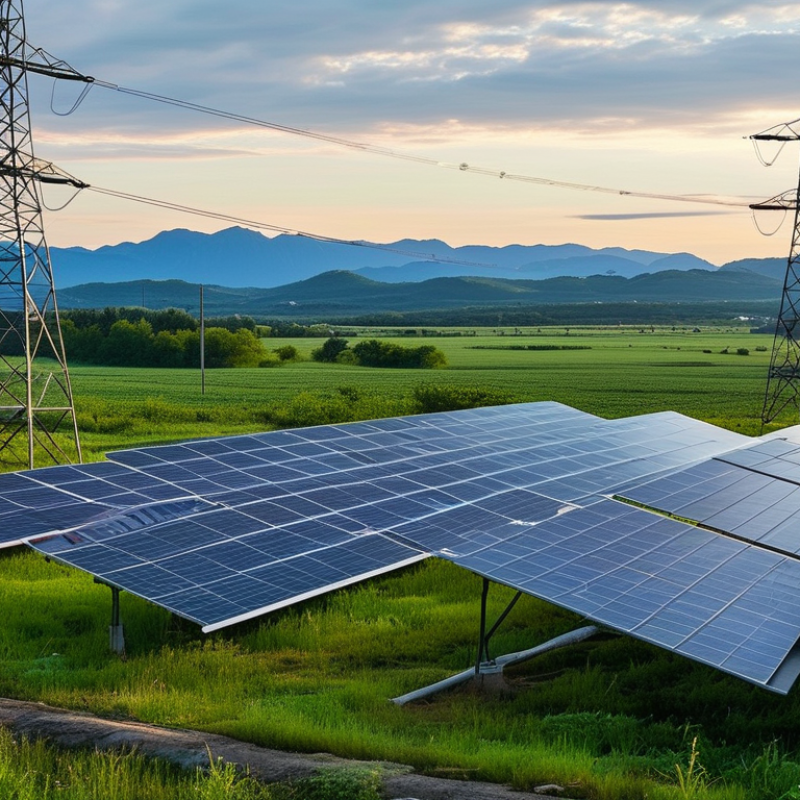
A grid-tie inverter converts solar panels’ direct current into usable alternating current. It synchronizes with the utility grid’s voltage and frequency. This allows your home to use solar power before drawing electricity from the grid. Excess electricity may flow back through a bidirectional meter, depending on local rules.
The device also includes anti-islanding protection. If the grid fails, it should stop exporting power. This protects repair crews working on nearby lines. A grid-tie inverter usually does not provide backup electricity during an outage. Batteries or additional backup equipment are needed for that function. The IEA PVPS Trends 2024 report recorded about 447 gigawatts of new solar capacity in 2023. Global solar capacity then exceeded 1.6 terawatts. Reliable power conversion matters at this scale.
From field experience, heat, dust, shading, and loose connections can reduce performance. A clean display does not always prove efficient operation. That deserves attention. NREL guidance emphasizes correct system design, monitoring, and safe installation. Local grid codes may also require certified equipment and approved interconnection procedures.
Tips: Check the inverter’s efficiency curve, operating temperature range, and monitoring data. Ask an installer how it handles voltage changes. Do not assume a grid-tie system will run during blackouts. That assumption causes expensive disappointment.
Why Choose a Grid Tie Inverter for Your Solar System?
A grid-tie inverter connects solar panels to the public electricity network. Solar panels produce direct current, but household appliances use alternating current. The inverter converts that energy and matches the grid’s voltage and frequency. It also tracks the panels’ best operating point, called maximum power point tracking. When sunlight is strong, unused electricity may flow back to the grid, depending on local rules and metering arrangements.
The system is practical because it usually needs no battery bank. That can reduce upfront cost, space requirements, and maintenance. IRENA’s Renewable Capacity Statistics 2024 reports that global solar capacity reached about 1,419 GW by the end of 2023. This rapid expansion shows the technology’s growing importance, but it also demands careful installation. During a grid outage, a compliant inverter must stop exporting electricity. This protects repair workers. It cannot provide backup power by itself. That detail is often misunderstood.
Tips: Check voltage compatibility, export rules, and shading before purchase. Ask a qualified installer to test grounding, protection settings, and cable temperature. Keep records of production for the first year. Real roofs are imperfect. Dust, heat, and shadows can reduce output more than expected. A design that looks excellent on paper may still need adjustment after real-world monitoring.
A grid-tie inverter connects solar panels with the utility network. It converts direct current into synchronized alternating current for household use. When production exceeds demand, surplus electricity can flow to the grid, subject to local rules and tariffs. This reduces the need for large battery storage.
The financial advantage is substantial. The IEA PVPS Trends 2024 report recorded more than 1.6 terawatts of global photovoltaic capacity by the end of 2023. As solar adoption grows, grid-tie systems help households use clean electricity without storing every midday surplus. Modern inverter systems typically reach conversion efficiencies above 95%, according to technical assessments from the U.S. National Renewable Energy Laboratory. Every percentage point matters when sunlight is limited.
There is a catch. A standard grid-tie inverter usually shuts down during a utility outage. This anti-islanding protection safeguards repair crews, but it leaves the building without solar power. That detail is often missed. A hybrid system with approved backup equipment may provide resilience, although it costs more and needs careful design. Before choosing equipment, installers should check voltage limits, export policies, local interconnection rules, and the roof’s real shading pattern. A clear winter morning can still produce less energy than a shaded summer roof.
| Evaluation Dimension | Grid-Tie Inverter | Key Benefit | Important Consideration |
|---|---|---|---|
| Typical conversion efficiency | Approximately 95%–99% for modern units | More of the solar array’s DC electricity is delivered as usable AC electricity. | Actual system yield also depends on shading, temperature, wiring, orientation, and inverter loading. |
| Energy use during grid availability | Solar power can supply on-site loads directly; surplus electricity may be exported where regulations permit. | Reduces electricity purchased from the utility and improves on-site solar utilization. | Export credits, tariffs, and interconnection rules vary by location and utility. |
| Battery requirement | No battery is required for basic grid-connected operation. | Lower upfront cost and fewer components than a solar-plus-storage system. | A battery or other backup system is needed if power must be available during a grid outage. |
| Grid outage behavior | Normally shuts down automatically when the utility grid fails. | Anti-islanding protection helps protect utility workers and the electrical network. | Standard grid-tie systems do not provide backup power unless paired with approved backup equipment. |
| System complexity | Typically simpler than systems that include batteries, charge controllers, and backup switching. | Simpler design can reduce installation time, maintenance requirements, and potential failure points. | Permits, inspections, utility approval, and professional installation may still be required. |
| Operating cost profile | No fuel cost and generally low routine maintenance after installation. | Can lower long-term electricity expenses and reduce exposure to utility price increases. | Financial results depend on system price, electricity rates, incentives, financing, and solar production. |
| Environmental benefit | Generates electricity from sunlight without direct operational combustion emissions. | Can reduce reliance on electricity generated from fossil fuels, depending on the local grid mix. | Lifecycle impacts include manufacturing, transportation, installation, and eventual equipment recycling. |
| Scalability | Capacity can often be expanded by adding compatible modules and associated electrical equipment. | Supports phased investment as electricity demand or available installation area changes. | Expansion must remain within inverter limits, local electrical codes, roof capacity, and interconnection limits. |
| Best-fit application | Homes, commercial buildings, and facilities with reliable grid access and daytime electricity consumption. | Makes use of existing grid infrastructure while reducing dependence on purchased electricity. | Locations requiring continuous power during outages may be better suited to a hybrid inverter and battery system. |
Note: Performance, savings, export compensation, safety requirements, and payback periods vary by system design, local climate, electricity rates, regulations, and utility policies.
Why Choose a Grid-Tie Inverter for Your Solar System?
A grid-tie inverter connects solar panels with the public electricity network. It converts direct current into grid-compatible alternating current. According to IEA PVPS Trends 2024, global photovoltaic additions exceeded 400 GW in 2023. This rapid growth makes inverter quality increasingly important. A suitable unit should provide accurate maximum power point tracking, low conversion losses, and stable output during changing sunlight.
Safety features deserve close attention. Anti-islanding protection must stop power export during a grid outage. The inverter should also manage voltage, frequency, and reactive power requirements under local interconnection rules. IEC 62116 and IEC 61727 provide widely recognized testing guidance for these functions. Check certification documents, not only marketing efficiency figures. A laboratory rating is not rooftop performance. Temperature, dust, cable length, and shading can reduce actual output.
Monitoring should show daily energy, operating temperature, fault codes, and grid status. Clear data helps technicians identify loose connections or repeated voltage trips. IRENA’s Renewable Capacity Statistics 2024 reported 346 GW of new solar capacity in 2023, showing how quickly installations are scaling. However, larger deployment does not remove site-specific risks. A unit with a broad voltage window may perform better on a roof with partial shading. No design is perfect. Ask whether the inverter supports local grid codes, future panel expansion, and safe maintenance access before installation.
A grid-tie inverter converts DC electricity from solar panels into grid-compatible AC power. High efficiency, low harmonic distortion, stable power factor, and MPPT operation are key features for safe and effective energy production.
Modern grid-tie inverters commonly achieve peak efficiencies above 97%, maintain power factors close to 1.00, and limit total harmonic distortion to approximately 5% or less. Actual performance depends on system design, operating temperature, grid conditions, and inverter loading.
Choosing the right grid-tie inverter starts with your home’s electrical conditions, not its advertised wattage. Check the array’s maximum voltage, operating voltage, and current range against the inverter’s input limits. A mismatch can reduce production or create serious equipment stress. Measure twice.
Match the inverter’s rated output to your solar array and local grid connection. A small amount of panel oversizing may improve morning and winter production, but excessive oversizing can cause clipping and shorten useful performance. Review the inverter’s maximum power point tracking range, conversion efficiency, and response during partial shading. Roofs rarely receive perfect sunlight. Chimneys, trees, and seasonal shadows matter.
Safety and installation quality deserve equal attention. Select equipment with recognized electrical certifications, anti-islanding protection, surge protection, and clear fault reporting. Confirm that its voltage and frequency settings suit your utility requirements. An installer should also inspect cable length, ventilation, ambient temperature, and enclosure placement. Heat can quietly reduce output. I have seen system plans focus heavily on panel capacity while overlooking these details. That approach looks efficient on paper, yet performs poorly in the field. Monitoring is useful when it shows daily yield, error codes, and unusual production drops. Choose a system that technicians can service without replacing unrelated components. Some specifications remain difficult to compare, so request full technical sheets rather than relying on headline efficiency alone.