How to Choose the Best Current Inverter for Your Needs?
Choosing the best Current Inverter is crucial for various applications. With the rise in renewable energy usage, these devices have seen significant advancements. According to a 2022 report by the International Energy Agency, the inverter market is projected to grow by 15% annually. This shows the importance of selecting the right inverter for efficiency and performance.
Current Inverters come in different types to meet diverse needs. Some are designed for residential use, while others cater to commercial applications. Understanding your specific requirements is essential. Accurate calculations and assessments can prevent future issues. A poorly chosen inverter can lead to energy losses and reduced lifespan.
When evaluating options, consider factors like efficiency ratings and features. Industry experts recommend inverters with at least 95% efficiency. This level of performance ensures optimal energy conversion. However, it’s important to remember that higher efficiency often comes with higher costs. So, weigh your budget against potential savings.

Understanding Current Inverters: Types and Features
When choosing a current inverter, understanding its types and features is essential. Current inverters can be categorized into different types based on technology, such as pure sine wave, modified sine wave, and square wave. Pure sine wave inverters provide clean power similar to grid electricity. These are ideal for sensitive electronics. Modified sine wave inverters are more cost-effective but can cause overheating in certain devices. Square wave inverters are the simplest and least expensive but have limited applications.
Features also play a critical role in the selection process. Key features to consider include power rating, efficiency, and safety mechanisms. Look for inverters with overload protection and temperature control. It’s important to match the inverter's power output with your needs. An underpowered inverter may not function optimally. Additionally, assess whether portability is significant for your situation. Some models are lightweight and easy to transport, while others offer more robust installations for home use.
Choosing the right one can become overwhelming. The market is saturated with options that seem similar. Take time to research and compare specifications. Don't rely solely on user reviews; understand the technical details. Your unique requirements will drive the best choice. Reflect on future energy needs to avoid purchasing too small an inverter. Balancing features and functionality is essential for long-term satisfaction.
Assessing Your Power Needs: Determining Capacity Requirements
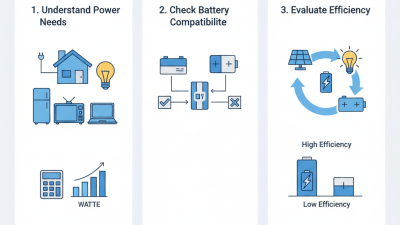
Determining capacity requirements is crucial for selecting an optimal current inverter. Your power needs directly influence the inverter’s efficiency and performance. The Total Energy Demand Assessment report indicates that households typically require between 3,000 to 5,000 watt-hours daily. Understanding these numbers helps you identify the inverter's capacity you need.
When calculating, consider your appliances and their power consumption. For example, a refrigerator may draw 150 watts, while air conditioning units may consume over 2,000 watts. Focus on peak loads to avoid underestimating your needs. Gaps in this assessment can lead to inverter overload, resulting in shortened lifespan or failure.
Monitor the running time of each appliance. This data helps create a detailed power profile. Studies from energy efficiency organizations reveal that many users fail to account for intermittent power requirements. Factor in startup surges, particularly from motors. Ignoring these can lead to inadequate sizing. Inverters should accommodate both continuous and surge ratings to ensure reliability.
Evaluating Efficiency Ratings: Importance of Performance Metrics
When selecting a current inverter, efficiency ratings become critical. These ratings reflect how well an inverter converts DC power to AC power. High efficiency ensures less energy loss and lower electricity costs. A recent study by the National Renewable Energy Laboratory showed that inverters with efficiency ratings above 95% can save users significant amounts over time.
Understanding performance metrics also involves evaluating load management. Inverters should handle various loads without overheating. The California Energy Commission found that inverters operate most efficiently at 50% to 75% of their capacity. If the load is too low or too high, performance drops. Therefore, assessing your power needs is essential for optimal inverter performance.
Another factor is the inverter's temperature coefficient. As temperatures rise, inverter efficiency can decline. A report from the Solar Energy Industries Association highlighted that inverters with better temperature coefficients can yield 1-2% more energy annually in hot climates. Awareness of these metrics allows consumers to make informed choices. Unfortunately, many overlook these details, which can lead to poor energy management.
Comparing Costs: Budgeting for Your Current Inverter
When budgeting for a current inverter, it's crucial to assess your needs accurately. Define the power requirements for your devices. Consider whether you need a portable option or a stationary unit. Assessing your energy consumption helps determine the inverter type and capacity you require. This avoids overspending on features you don’t need.
Prices vary widely depending on specifications. Basic models start at a low cost, while advanced inverters come with a hefty price tag. Look for units that offer reliable performance without unnecessary features. It's also essential to factor in installation costs. Installation can add significantly to your budget.
Don't forget maintenance expenses. Regular checks are necessary for optimal performance. Cheaper inverters might require more frequent servicing, increasing long-term costs. It’s a delicate balance between initial costs and future savings. Evaluate warranties as they provide insights into reliability and manufacturer confidence. A well-planned budget today can prevent financial strain later on.
Installation and Maintenance Considerations for Inverter Systems
When considering inverter installation, proper planning is crucial.
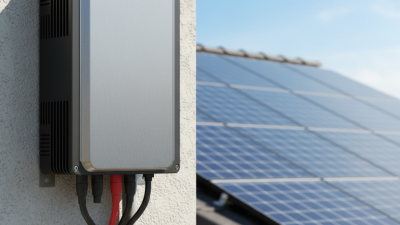
Evaluate your location for sunlight exposure. A clear, unobstructed area is ideal.
Installation requires specific knowledge. It’s best to consult experts who understand
local regulations and codes.
Maintenance is another critical factor. Regular checks can prolong the lifespan of
your inverter. Dust and debris can reduce efficiency. Clean the inverter and
surrounding areas periodically. Also, check connections and wiring for wear.
Tips: Ensure the inverter has adequate ventilation. Overheating is a common issue.
Keep an eye on performance metrics. Sudden drops in efficiency may signal a problem
needing immediate attention. By staying proactive, you can avoid costly repairs
down the line.