Why Choose a Backup Inverter for Reliable Power Solutions?
When it comes to power solutions, reliability is key. Experts like John Smith, a lead engineer at PowerTech Innovations, advocate for the importance of a Backup Inverter. He once stated, "A Backup Inverter can be a game-changer during power outages." This technology ensures that your essential devices remain powered, minimizing disruptions.
In our increasingly connected world, the need for uninterrupted power is critical. Many households and businesses rely on Backup Inverters for their ability to seamlessly switch to battery power. They offer more than just a temporary fix; they provide peace of mind. The fear of losing data or compromising safety can discourage people from taking necessary steps.
Understanding the advantages of a Backup Inverter can help in making informed decisions. They not only protect valuable equipment but also enhance energy efficiency. However, navigating the options can feel overwhelming. It's essential to weigh the pros and cons of different models and features. This critical analysis can lead to better choices for reliable energy solutions.
Understanding the Functionality of Backup Inverters
Backup inverters play a critical role in ensuring reliable power solutions.
They facilitate a seamless transition to backup power during outages. According to the U.S. Energy Information Administration, power outages have increased by 124% since 2000.
This surge makes backup inverters essential for both residential and commercial applications.
These devices convert DC power from batteries into AC power suitable for everyday use. When the main power source fails, backup inverters activate,
providing electricity to vital appliances. This ensures that households can maintain comfort and safety during disruptions.
An estimated 38% of businesses experience outages that lead to significant financial losses.
Implementing a backup inverter can mitigate this risk effectively.
Despite their advantages, some users overlook their maintenance needs.
Regular inspection and battery checks are essential for optimal performance.
Failing to do so may result in unexpected failures during critical moments. Moreover, understanding the capacity and load requirements is vital.
An inadequate inverter may be unable to support essential devices, rendering it ineffective during an outage.
Key Advantages of Using Backup Inverters for Power Reliability
Backup inverters play a crucial role in ensuring power reliability. Their main advantage lies in providing a stable power source during outages. According to a report by the U.S. Energy Information Administration (EIA), nearly 15% of Americans experienced power interruptions in 2021. This statistic highlights the need for reliable backup solutions. Using backup inverters can protect sensitive electronics from damage during power fluctuations.
One key advantage of backup inverters is their efficiency. Studies show that modern inverters operate at over 90% efficiency. This means less energy wastage and lower utility bills. They seamlessly switch to battery power, ensuring that critical devices remain operational. This seamless transition is essential in emergencies. It prevents data loss in businesses and maintains comfort at home.
Tips: Regularly inspect your battery and inverter setup to ensure peak performance. Neglecting maintenance can lead to unexpected failures.
Another benefit is their scalability. Backup inverters can be combined with renewable energy systems. This integration allows homeowners to reduce dependence on the grid. A study from the International Renewable Energy Agency (IRENA) emphasizes the growing trend of solar and energy storage adoption. However, one must consider installation costs and technical compatibility. Evaluating these aspects ensures a more reliable power supply.
Tips: Research local regulations before installation to avoid compliance issues.
Power Reliability: Advantages of Backup Inverters
Comparison of Backup Inverters with Traditional Power Solutions
When evaluating power solutions, backup inverters stand out against traditional options. Traditional power systems often rely on grid electricity or backup generators, which can be inefficient and slow to respond. According to industry data, the average downtime for traditional systems can reach up to 10 hours during outages. In contrast, backup inverters deliver power instantly, ensuring a seamless transition. This capability makes them critical for essential services like healthcare and data centers.
Backup inverters typically have a longer lifespan than conventional generators. Reports suggest that inverters can last over 15 years, while generators may only function reliably for eight years with regular maintenance. Moreover, they are quieter and produce no emissions during operation, addressing environmental concerns. For instance, residential users can save up to 40% in energy bills by utilizing high-efficiency battery systems coupled with these inverters. Such statistics underline their reliability and cost-effectiveness for homeowners.
In summary, while backup inverters appear advantageous, they also require thoughtful consideration. The initial investment is higher than traditional systems. Users must assess their specific needs and energy consumption patterns. This reflection can help determine whether backup inverters are the right choice for their power strategy.
Factors to Consider When Selecting a Backup Inverter
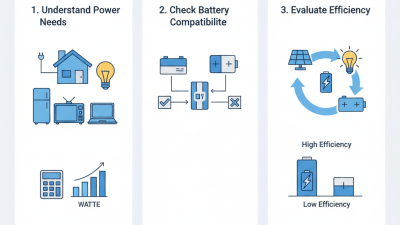
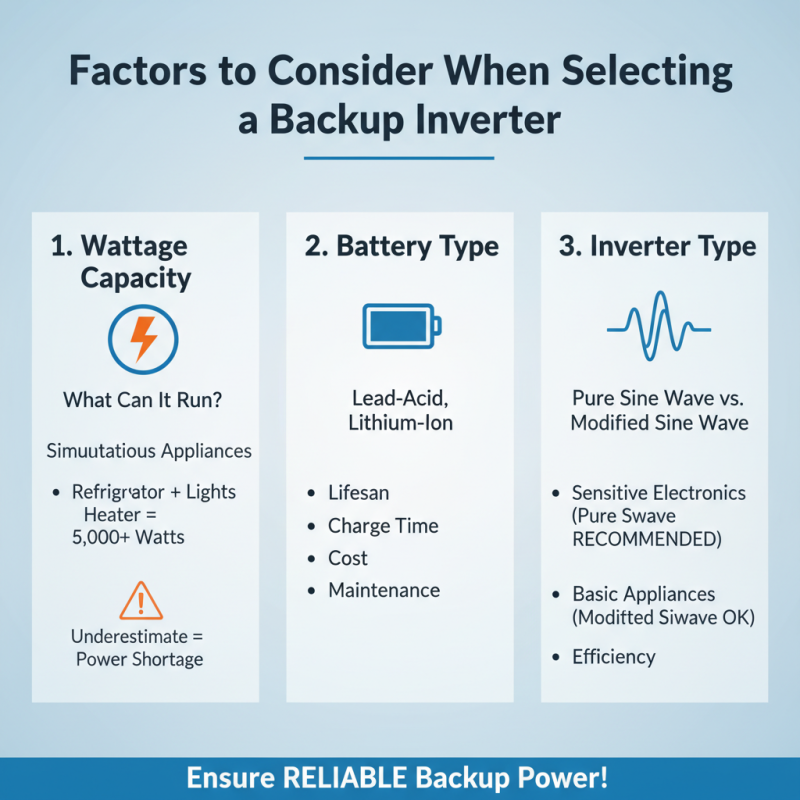
Selecting the right backup inverter requires careful consideration of several factors. One crucial aspect is wattage capacity. It dictates what appliances can run simultaneously during an outage. For example, a household with a refrigerator, lights, and a heater might need at least 5,000 watts. Underestimating this could lead to power shortages.
Efficiency ratings also play a significant role. Inverter efficiency typically ranges from 80% to 95%. Higher efficiency means less energy wasted. According to a 2021 report from the International Renewable Energy Agency, using a high-efficiency inverter can save users up to 15% on electricity costs. This detail often gets overlooked during the selection process.
Another important consideration is battery compatibility. Not all inverters work with every type of battery. Lead-acid batteries differ from lithium-ion, affecting charge times and lifespans. Users must check specifications to prevent mismatched systems. Choosing the right combination affects overall reliability and performance. Understanding these nuances is key to making an informed choice for reliable power solutions.
Common Applications of Backup Inverters in Various Sectors
Backup inverters are crucial for various sectors, ensuring power reliability. They are widely used in residential areas, commercial buildings, and industrial settings. In homes, backup inverters can keep essential appliances running during outages. This means lights, refrigerators, and heating systems can remain unaffected.
In commercial applications, businesses rely on backup inverters to maintain operations. Restaurants, for example, need constant power for refrigeration. A sudden power loss can lead to spoiled food and financial losses. Here, backup inverters act as safety nets, protecting against unforeseen disruptions. Hospitals also depend on them. Medical equipment must operate continuously, and backup inverters ensure this reliability.
Tip: Regularly check your backup inverter’s performance. Routine maintenance can prevent unexpected failures.
Industrial settings require robust solutions, and backup inverters provide just that. Manufacturing plants need continuous power to maintain productivity. Downtime can be costly. Relying on backup inverters can mitigate these losses. However, not all backup systems are equal. It’s vital to assess your specific needs before making a choice.
Tip: Invest in monitoring systems. They help track inverter performance and battery levels, providing peace of mind.