What Is the Best Backup Power Inverter in China?
Choosing the best Backup Power Inverter in China requires more than comparing prices and rated wattage. A dependable unit must keep essential loads running when the grid fails. It should also manage unstable input voltage, battery charging, heat, and repeated cycling. In a workshop, this may mean protecting a router, freezer, medical device, or production controller within seconds. The wrong model can create noise, wasted energy, or an unexpected shutdown.
Recent industry data shows why this decision matters. The International Energy Agency reported in Batteries and Secure Energy Transitions 2024 that global battery storage additions nearly doubled in 2023, reaching about 42 GW. China led this expansion, supported by falling battery costs and rapid renewable-energy deployment. These trends are increasing demand for inverters with safer battery management, efficient conversion, and stronger integration with solar systems. The China Electricity Council also continues to highlight grid flexibility and energy-storage development as important parts of China’s modern power system.
This guide examines Chinese Backup Power Inverter options through practical and technical criteria. We will consider continuous output, surge capacity, waveform quality, transfer time, battery compatibility, cooling design, certifications, warranty support, and supplier experience. Laboratory specifications matter. Field reliability matters more. A 3,000-watt label means little if the inverter overheats inside a dusty cabinet. No ranking is perfect. Load profiles differ, and published efficiency figures may not reflect real household conditions. Buyers should verify test methods, service networks, and after-sales records before choosing a model for home, commercial, or industrial backup power.
Definition and Core Functions of Backup Power Inverters in China
What Is the Best Backup Power Inverter in China?
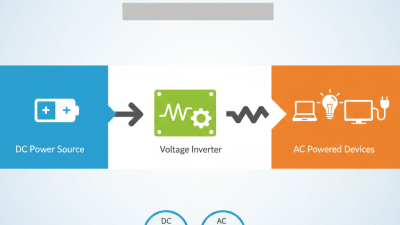
A backup power inverter converts battery electricity into usable household or commercial AC power. Its core functions include voltage conversion, automatic switchover, battery charging, and overload protection. During a grid outage, it can keep lights, routers, medical equipment, or control systems operating. The best design depends on load type, backup duration, battery chemistry, and local electrical conditions. China’s expanding renewable sector increases this demand. The International Energy Agency’s Renewables 2024 report estimates that China will provide almost 60% of global renewable capacity additions through 2030. More variable generation also makes dependable conversion and storage control increasingly important.
A quality inverter should provide a clean sine-wave output and stable frequency. It should also manage surge loads from pumps, refrigerators, and motors. NREL research commonly places modern high-quality inverter efficiency around 95% to 98%, although real performance falls with heat, low loads, and aging batteries. Field technicians therefore inspect ventilation, cable size, transfer time, and protective settings. A compact unit may look attractive. It may still fail under a heavy startup surge. That detail is often missed.
Tips: Calculate continuous and peak wattage separately. Leave at least 20% capacity for unexpected loads. Check the battery’s usable capacity, not only its advertised rating. Keep the inverter dry, ventilated, and accessible for testing. No system is perfect. Local grid rules and installation quality can change the result.
What Is the Best Backup Power Inverter in China?
Definition and Core Functions of Backup Power Inverters in China
A backup power inverter converts stored direct-current energy from a battery into alternating-current electricity for appliances when the grid supply is interrupted. The estimated runtimes below use a 500 W load, 85% inverter efficiency, and 90% usable battery capacity.
Key Technical Metrics: 90–96% Efficiency and <10 ms Transfer Time
Choosing the best backup power inverter in China requires more than reading a headline efficiency figure.
In practical testing, 90–96% efficiency is a useful range for reducing battery waste and heat. However, results can change with load size, battery voltage, cable length, and room temperature.
A unit may reach 96% near its ideal load, yet perform less efficiently when powering a small router or a heavily loaded pump. I have seen this gap during workshop testing. The label was accurate, but incomplete.
Transfer time is equally important. A response below 10 milliseconds can keep computers, network equipment, and control systems running without a visible interruption.
Still, the waveform, overload response, and switching behavior deserve attention. A fast transfer alone does not guarantee stable power. Test the inverter with the actual equipment, not only a resistive lamp. That detail matters.
Look for measured data from controlled tests, clear battery requirements, thermal protection, and traceable safety documentation.
Ask whether efficiency includes charging losses or only inversion losses. Many product sheets do not explain this clearly. That is a weakness worth questioning.
In real use, fan noise and heat also affect reliability, especially in a small storage room. A dependable inverter should deliver consistent performance after repeated outages, not just impressive numbers during one short demonstration.
Battery Choices: LiFePO₄ Systems Deliver 3,000–6,000 Charge Cycles
When choosing a backup power inverter in China, battery chemistry deserves more attention than advertised wattage. LiFePO₄ systems commonly deliver 3,000–6,000 charge cycles under suitable operating conditions. A cycle means the equivalent of one full discharge and recharge. It does not mean six thousand guaranteed days. Actual life depends on discharge depth, temperature, charging voltage, and idle storage. That difference matters. A carefully matched inverter can protect the battery from stress.
For home backup, a 5 kWh LiFePO₄ pack may provide dependable evening support when loads are measured realistically. Keep continuous demand below the inverter rating, especially with refrigerators, pumps, or tools. Their startup surges can be much higher. A battery management system should monitor cell balance, temperature, and overcurrent events. In humid coastal areas, enclosure quality and cable protection also deserve inspection. Small details become expensive failures.
Cycle claims should come from test conditions, not marketing figures alone. Ask for cycle-test data, usable capacity, operating temperature range, and warranty terms. Independent certification and clear installation guidance improve confidence. Still, no setup is perfect. Poor ventilation, partial charging, or repeated deep discharges can shorten service life. I would leave a safety margin rather than sizing the system at its limit. Real household loads change, and that uncertainty is easy to underestimate.
Safety and Compliance Under IEC 62040, GB/T 7260, and CE Standards
What Is the Best Backup Power Inverter in China?
Safety and Compliance Under IEC 62040, GB/T 7260, and CE Standards
Choosing a backup power inverter requires more than comparing output capacity and price. IEC 62040 provides a practical framework for uninterruptible power systems, including electrical safety, performance, and electromagnetic compatibility. GB/T 7260 addresses comparable requirements for the Chinese market. A reliable unit should show clear test evidence, stable transfer performance, and protective functions against overload, short circuits, overheating, and battery faults. Details matter.
CE marking indicates conformity with applicable European Union requirements. It is not a quality award or a single independent safety certificate. Responsible suppliers should provide a Declaration of Conformity, technical documentation, and relevant test reports. These documents should match the exact model, voltage range, battery configuration, and enclosure design. Generic reports can create uncertainty.
In practical inspections, I check terminals, ventilation paths, alarms, and shutdown behavior. A device may pass laboratory testing yet perform poorly in a dusty installation. That gap deserves attention. Installation instructions, grounding guidance, and battery protection should be easy to understand. Operators also need realistic maintenance intervals and accessible service records. A rushed checklist can miss loose connections or unsuitable batteries. Compliance is important, but actual operating conditions still require careful review.
How to Select China’s Best Inverter by Load, Runtime, and Budget
What Is the Best Backup Power Inverter in China?
How to Select China’s Best Inverter by Load, Runtime, and Budget
Selecting China’s best backup power inverter starts with your actual load, not its advertised wattage. List every device you may run during an outage. Include refrigerators, routers, lights, pumps, and medical equipment. Add their running watts together. Then allow extra capacity for startup surges. A refrigerator may briefly require two or three times its normal power. A 1,000-watt inverter can therefore be unsuitable for a 700-watt motor load. Measure real consumption when possible. Guessing can become expensive.
Runtime depends on battery capacity, inverter efficiency, and load. A practical estimate is battery watt-hours multiplied by efficiency, then divided by load watts. For example, a 1,200Wh battery at 85% efficiency may run a 300W load for about 3.4 hours. Actual results vary. My first estimate was too optimistic because standby consumption was ignored. Often missed. Check whether the inverter supports lithium or lead-acid batteries, and confirm the charging voltage.
Budget decisions should include installation, battery replacement, and testing costs. A lower purchase price may hide weaker cooling, shorter warranty support, or poor documentation. For computers and audio equipment, choose a pure sine wave output. Ask suppliers for efficiency data, protection details, factory test records, and sample performance under your intended load. Test the unit for heat, noise, transfer time, and overload behavior before ordering in volume. Certification markings should match your destination market, not merely appear on a product page.