How to Choose the Right Electric Inverter for Your Needs?
Choosing the right Electric Inverter can be a daunting task. Many factors come into play. With the market flooded with options, how do you make the best choice? Expert Ethan Wilder, a leading figure in the electric power industry, states, "Selecting an inverter requires understanding your specific energy needs." This insight reminds us that a one-size-fits-all approach rarely works.
Electric Inverters convert DC power to AC power. This is essential for many applications, from home systems to mobile setups. You must consider output capacity, efficiency, and features that suit your lifestyle. Each detail matters. A high-efficiency inverter can significantly reduce electricity costs over time.
However, not everyone knows their energy requirements. Many individuals underestimate their needs. This oversight can lead to unexpected challenges. Reflecting on these factors can help users make informed decisions. After all, the right Electric Inverter is not just a purchase; it is an investment in your energy future.

Understanding the Basics of Electric Inverters
Electric inverters are essential devices that convert direct current (DC) into alternating current (AC). They play a crucial role in various applications, from solar energy systems to backup power solutions. Understanding the basics of how these devices work is vital for choosing the right one. An inverter's efficiency, input voltage, and output capacity are critical factors to consider. Knowing the wattage requirements of your devices helps you determine the inverter size needed.
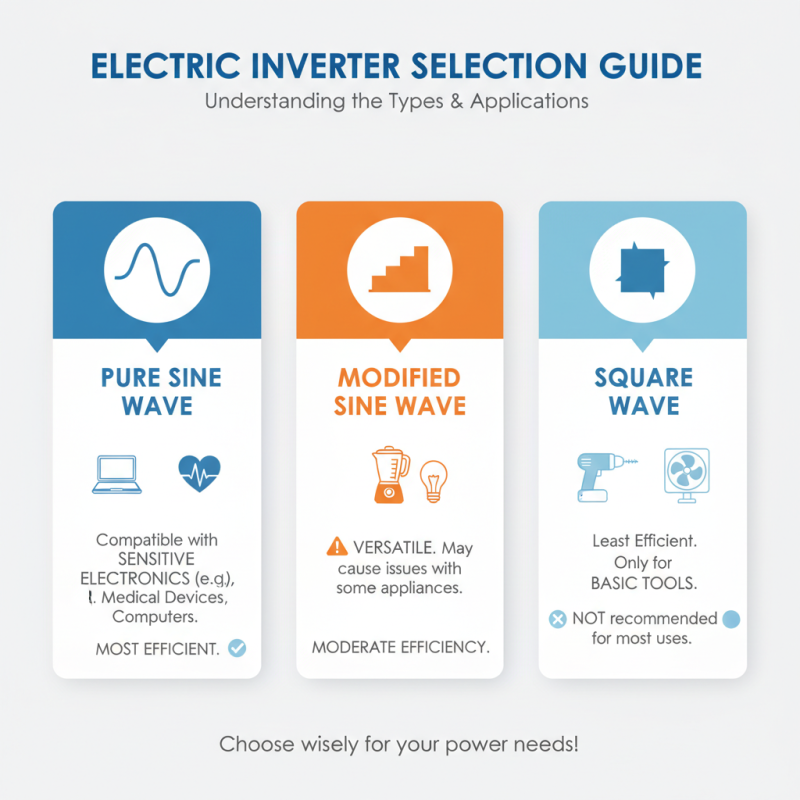
Different types of inverters exist. Pure sine wave inverters are ideal for sensitive electronics, while modified sine wave inverters may suffice for less demanding devices. Be mindful that using the wrong type can lead to inefficient power usage or potential damage. Evaluating the peak versus continuous power output is also essential. Sometimes, people overlook these specifications, leading to regrets after purchase.
It's easy to get lost in the technical jargon. Some terms might seem complicated, but the basics are straightforward enough to grasp. Pay attention to your specific needs. This reflection can inform your choices. Don't rush into buying. Take time to research the best features for your situation. Finding the right electric inverter requires careful thought and a bit of trial and error.
How to Choose the Right Electric Inverter for Your Needs?
| Inverter Type |
Power Output (W) |
Input Voltage (V) |
Efficiency (%) |
Application |
| Pure Sine Wave Inverter |
1000 |
12 |
90 |
Home Appliances |
| Modified Sine Wave Inverter |
600 |
12 |
85 |
Small Devices |
| Inverter Charger |
1500 |
24 |
88 |
Home Backup |
| Wind Inverter |
2000 |
48 |
92 |
Renewable Energy |
| Solar Inverter |
3000 |
48 |
95 |
Solar Power Systems |
Identifying Your Power Requirements for Inverter Selection
When choosing an electric inverter, understanding your power requirements is vital. Each device you connect consumes a certain amount of energy. List all the appliances you plan to use with the inverter. Consider their wattage and how many hours you need them to run. For instance, a refrigerator may use around 100-800 watts depending on the model. A light bulb might only consume 10-100 watts.
Once you have this information, add up the total wattage. It often adds up faster than expected. Recognizing the start-up wattage (the surge power when devices kick on) is also crucial. This number can be two to three times higher than their running wattage. Misestimating this can lead to an inverter that underperforms or trips frequently.
People often overlook these details. They assume all devices are similar in power consumption. However, they vary significantly. For example, a mini fridge and a full-size refrigerator will have very different needs. Therefore, be thorough in your calculations. Inverter sizing is not an exact science, and it can be tricky. A slightly too-small inverter can disappoint when you need power the most. Reflect on your true requirements before making a purchase.
Power Requirements for Different Applications
Types of Electric Inverters and Their Applications
When selecting an electric inverter, it's crucial to understand the different types available and their applications. There are primarily three types: pure sine wave inverters, modified sine wave inverters, and square wave inverters. Pure sine wave inverters are compatible with sensitive electronics, making them ideal for medical devices or computers. Modified sine wave inverters offer more versatility but can cause issues with some appliances. Square wave inverters are the least efficient and can only power basic tools.
Tips: Consider your daily needs. Do you run devices that require a pure sine wave? If yes, choose accordingly.
In practical terms, think about your power consumption. If your appliances use less power, a modified sine wave inverter could suffice. However, you might want to evaluate if it will cause any electrical noise in your devices. It's often a trade-off between cost and necessity.
Tips: Always check wattage ratings. Many overlook this vital step. Misjudging your appliance's requirements could lead to unexpected failures. In the end, reflect on your actual needs and usage. What works for one person might not suit another.
Factors to Consider When Choosing an Electric Inverter
Choosing the right electric inverter can be challenging. There are several factors to consider. The first aspect is power requirements. Determine the wattage of your devices. This helps you select an inverter that can handle the load.
Next, consider inverter type. Modified sine wave inverters are often cheaper. However, they may not be suitable for sensitive electronics. Pure sine wave inverters provide cleaner power but can be more expensive. Think about the devices you'll connect. You might regret skimping on this choice later.
Look at efficiency ratings as well. Higher efficiency means less energy wasted. This can save you money in the long run. Additionally, the durability of the inverter is important. Inverters need to withstand various conditions. Consider venting and cooling features. These details often get overlooked but can impact performance greatly.
Top Brands and Models of Electric Inverters Available in the Market
When selecting an electric inverter, understanding the available brands and models is crucial. The market offers various options, each with unique features. Some inverters provide pure sine wave output, beneficial for sensitive electronics. Others focus on affordability, with modified sine wave outputs. You must consider your power requirements before making a choice.
Many popular models are designed for home use. They include compact designs that fit into tight spaces. Some are portable, making them perfect for camping or as backup power sources. It's essential to research each model thoroughly. User reviews can reveal potential issues, such as noise or overheating. Remember, not every highly-rated model is perfect for your needs. Relying solely on ratings can lead to disappointment.
Ultimately, knowing how you intend to use the inverter is key. Look for features like battery compatibility and input/output options. Look for models with built-in safety measures against overloads or surges. Don't overlook warranties and customer support. These aspects can influence your long-term satisfaction with the product. Consider your specific needs instead of just brand names and trendiness.