How to Choose the Right Backup Inverter for Your Power Needs?
Choosing the right backup inverter is essential for managing your power needs efficiently. A backup inverter transforms DC energy from batteries into usable AC power. This process is crucial during power outages. However, selecting the ideal inverter can be challenging. There are several factors to consider.
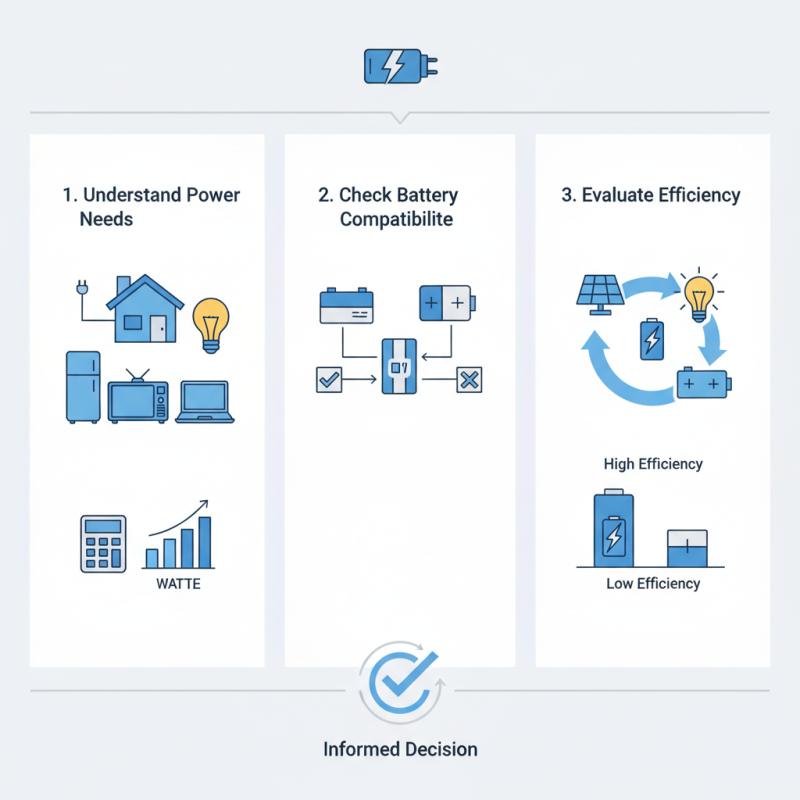
The first step is understanding your power requirements. Think about the appliances you want to use. Calculate their total wattage. This will help you determine the inverter size you need. Some may overlook this detail, leading to insufficient power supply. It's important to do the math carefully.
Additionally, remember to consider battery compatibility. Not all inverters work with every battery type. Researching this aspect can save you future complications. You may also need to evaluate the inverter's efficiency rating. An inefficient inverter can result in wasted energy. Choosing the right backup inverter is crucial for both immediate and long-term success. Make informed decisions to avoid regret later.
How to Determine Your Power Requirements for an Inverter
When choosing a backup inverter, understanding your power requirements is crucial. Start by listing all devices you plan to use. Include lights, fans, refrigerators, and any electronics. Each device has a specific wattage. If you don't know, check the labels or user manuals. You can also find this information online. Writing down these details will help you visualize your needs.
Consider how long you need power in an outage. This is often overlooked. You may find your total wattage is more than your inverter can handle. Look at surge ratings too. Some devices require extra power to start up. This is important for things like refrigerators. Add up your continuous and starting watts.
Finally, don't forget about future needs. Think about potential new devices. You might want to add more appliances later. Planning for growth can save you trouble down the road. The right backup inverter should not only meet your current needs but also adapt to your changing lifestyle. Adjust your calculations accordingly. It might feel daunting, but taking these steps ensures you make an informed choice.
How to Choose the Right Backup Inverter for Your Power Needs? - How to Determine Your Power Requirements for an Inverter
| Power Requirement (Watts) |
Recommended Inverter Size (VA) |
Typical Devices Powered |
Runtime (Hours) |
| 300 |
500 |
LED lights, phone chargers |
10 |
| 800 |
1000 |
Refrigerator, microwave |
5 |
| 1500 |
2000 |
TV, gaming console, laptops |
3 |
| 3000 |
4000 |
Air conditioner, power tools |
1.5 |
| 5000 |
6000 |
Whole house backup |
1 |
Understanding Different Types of Backup Inverters: Pros and Cons
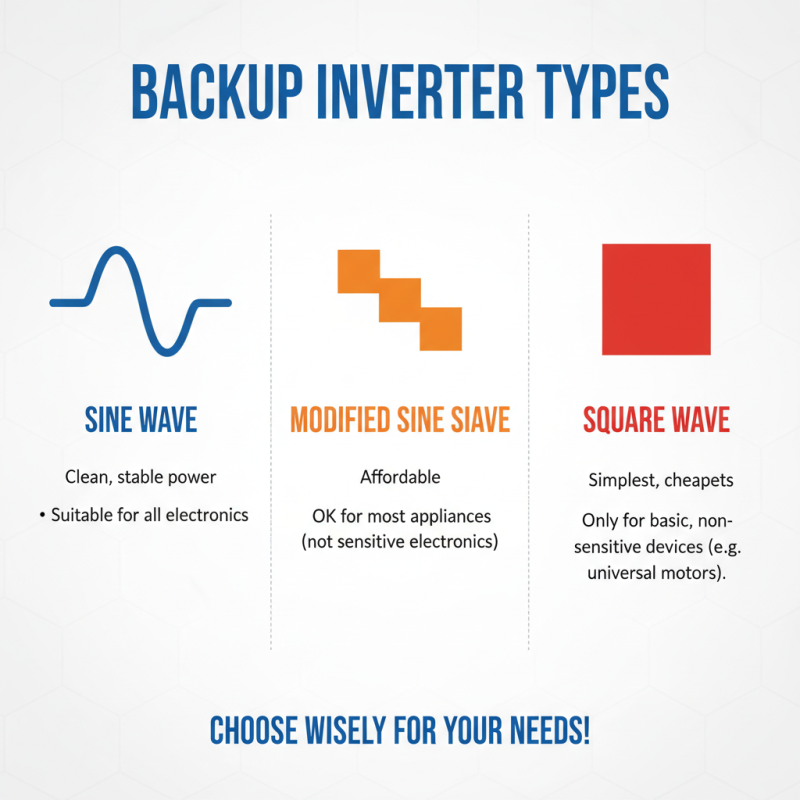
When selecting a backup inverter, understanding the types available is crucial. There are primarily three types: sine wave, modified sine wave, and square wave inverters. Each type has its own pros and cons.
Sine wave inverters are highly efficient and ideal for sensitive electronics. They produce clean power similar to grid electricity. However, they can be more expensive and complex to install. Modified sine wave inverters are a cost-effective choice, suitable for many household appliances. Yet, they may cause problems with sensitive devices and can lead to increased heat.
Consider the energy demands of your devices before choosing. Are you powering computers or heavy machinery? That will affect your choice. Also, think about the installation process. Some inverters require technical skills. If unsure, consulting with experts might save you future hassles.
Tips: Always check the power rating of your devices. This will help avoid overloads. Additionally, assess your budget carefully. A good quality inverter can save money in the long term. Don’t overlook warranty options. They can provide peace of mind if issues arise.
Evaluating Efficiency Ratings: What Do They Mean for You?
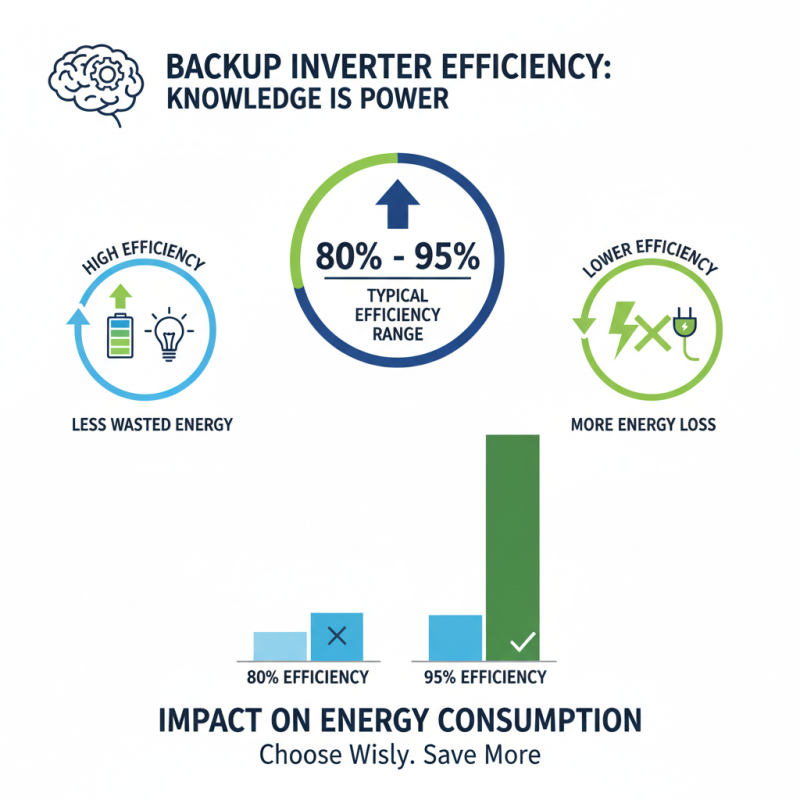
When evaluating efficiency ratings for backup inverters, knowledge is power. The efficiency of an inverter can significantly affect your overall energy consumption. Inverters typically have efficiency ratings between 80% and 95%. Higher efficiency means less wasted energy.
A study from the Solar Energy Industries Association reveals that choosing a high-efficiency inverter can save up to 20% on electricity bills. This is important in areas where energy costs are rising sharply. An inverter with a lower efficiency rating might be cheaper initially, but it can lead to higher operational costs over time.
Consider the inverter's real-world performance, not just the theoretical ratings. Variations in load, temperature, and other factors can affect how well an inverter operates. Efficiency can drop when an inverter works at low or high loads. This inconsistency raises concerns about reliability and total cost of ownership. Understanding these nuances helps in making a more informed decision.
Assessing Battery Compatibility with Your Backup Inverter
When selecting a backup inverter, battery compatibility is crucial. Not all batteries work seamlessly with every inverter. Consider the voltage and type of battery you plan to use. Lead-acid and lithium-ion batteries differ significantly. Ensure your inverter can handle the specific requirements of your chosen battery.
Check the inverter's charging capabilities as well. Some inverters may not fully charge certain battery types. This can lead to inefficient energy use. It's critical to read the specifications carefully. Sometimes, users overlook details that can impact performance.
Testing connections before committing to a purchase can save time. Evaluate how well the inverter integrates with the battery. Compatibility issues can arise unexpectedly. Recognizing potential mismatches early is beneficial. A proactive approach is essential to avoid future regrets.
Analyzing Input and Output Specifications for Optimal Performance
Choosing the right backup inverter requires a careful look at input and output specifications. Often, users overlook these details, leading to performance failures. According to a report by the International Renewable Energy Agency, selecting an inverter that can handle peak loads is critical for optimal operation.
Input specifications tell you the limits of power the inverter can accept. Commonly, inverters support various input voltages, typically ranging from 12V to 48V. A system that can’t handle your power source will underperform or, in worse cases, fail completely. Ensuring compatibility with energy sources, such as solar panels, is essential. Users should verify the inverter's input current rating to avoid unnecessary inefficiencies.
Output specifications determine how efficiently the inverter converts DC to AC power. This includes the wattage rating and waveform type. Pure sine wave inverters are ideal for most devices, but they can be pricier. Some users may settle for modified sine wave inverters, which can cause issues with sensitive electronics. A study disclosed that improper inverter choice could result in up to 30% energy loss. Carefully matching your load requirements with the inverter’s output capabilities is a step often missed but crucial for performance.